Ritual
What happens before the bell
The salute, the headband, the armbands and the band in the corner: what each fighter does before a Muay Thai bout, and where each custom comes from.
Hold a seat by the ring ↗Quick answer
The minutes before a Muay Thai bout belong to ritual. Each fighter salutes the teachers who trained them in the wai khru ram muay: a counter-clockwise lap with bows at the corners, then a personal dance, played in by a small band. The headband, the mongkhon, and the armbands, the pra jiad, carry their own meanings. It is respect, not a warm-up.
Why the bout starts slowly
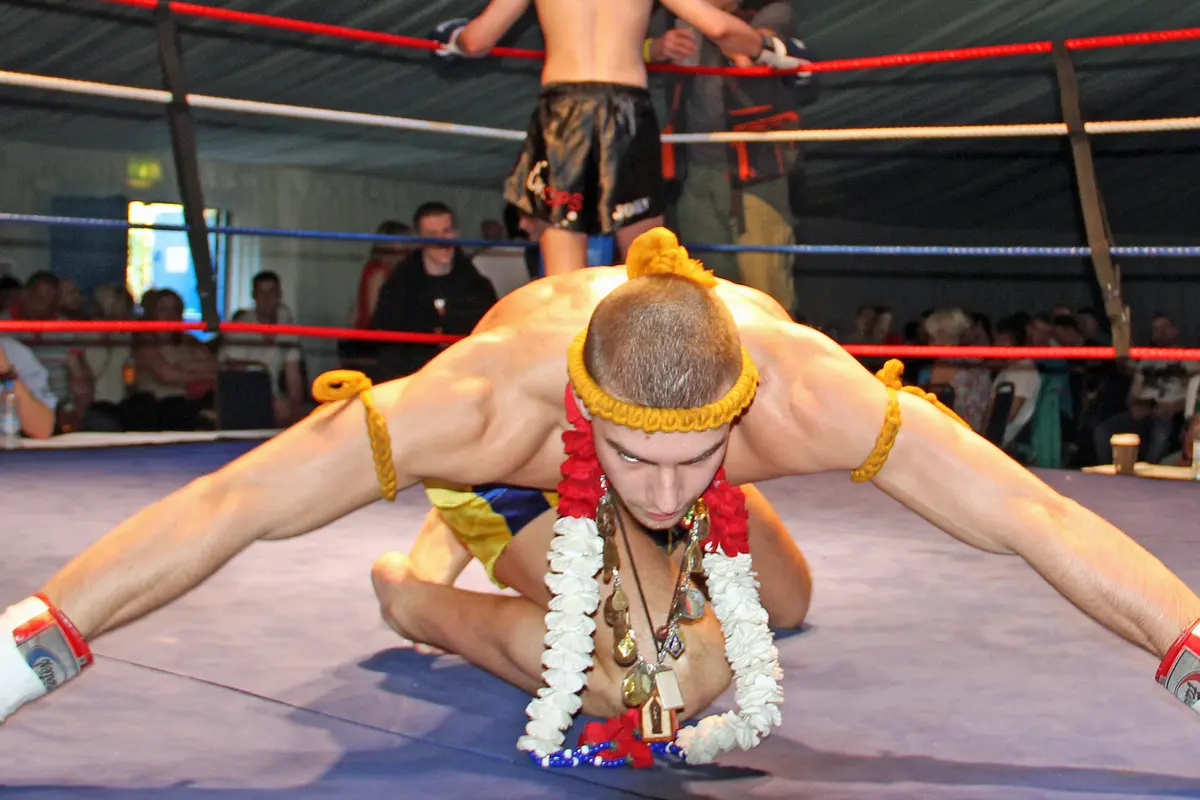
A Muay Thai bout does not begin with the bell. It begins with ritual. Break the name into its parts and it explains itself: wai is the greeting made with joined palms; khru, a word that comes from the Sanskrit guru, means teacher; ram names classical-style dance; and muay, boxing. One English rendering is a war dance saluting the teacher, though in conversation the phrase shrinks to wai khru or ram muay. The same respect for teachers runs through Thai music and khon dance, and the ring keeps it.
Corners, bows and the dance
The fighter starts by walking the ring counter-clockwise and stopping at each corner to pray, with three bows: to the Buddha, to the Dharma, to the Sangha. The dance that follows, the ram muay, takes its movements, tradition says, from Hanuman. Every fighter's version differs. Some keep it to a few gestures, others perform a long, intricate sequence, and the details often reveal the camp or the region behind the fighter. When bouts were fought before royalty, the dance honoured the king as well. Two fighters dancing side by side rarely look alike.
Where the ritual came from
Before muay was a sport it was preparation for war, and fighters would ask monks to bless and protect them before battle. That request slowly hardened into a ceremony. When fighting moved into the ring, the spiritual element survived, but its focus shifted: less towards spirits, more towards the teachers and trainers who shaped the fighter. Parents and ancestors are honoured in the dance too. Nothing here is put on for visitors; it is part of the competition itself, which is why it pays to be seated before each bout begins.
The mongkhon
The stiff headband is the mongkhon, sometimes spelled mongkol, a word that carries ideas of luck, protection and the sacred. In today's sport it stands for the gym. A trainer traditionally hands it over only when satisfied that the fighter is ready to fight under the gym's name, and it is common to see the trainer remove it once the salute is done and set it down in the corner for luck. Whatever their own faith, many fighters take the mongkhon to a Buddhist monk to be blessed before a fight.
The pra jiad
Round the upper arm you may see one or two pra jiad. The usual origin story is a wartime one: a young man going off to fight would tie a strip of his mother's sarong around his arm, for luck and for a safe return. Later the bands gained patterns and colours that speak of a fighter's lineage, skill and beliefs. Tradition treated them with care; a pra jiad was kept somewhere high, since dropping it or stepping over it was believed to rob it of its power. In the ring it also steadies the arm a little.
The band in the corner
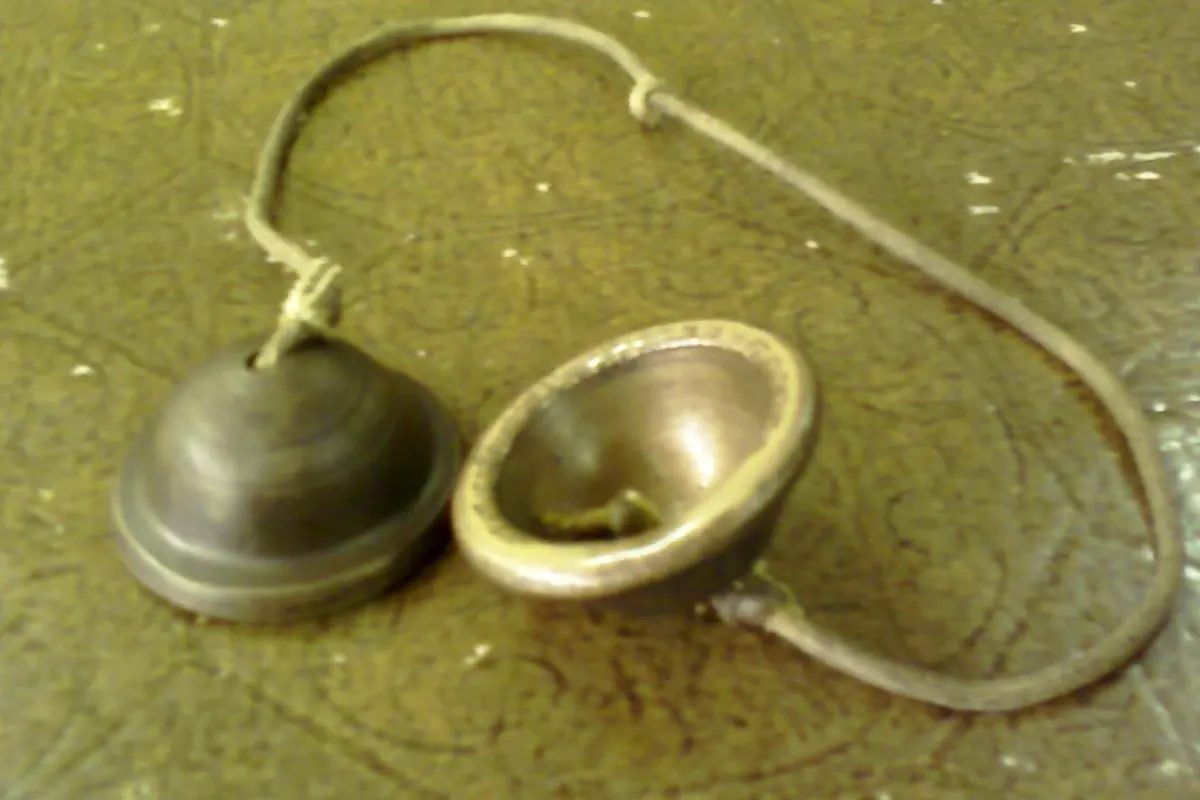
The music you hear is sarama, the piece played for the pre-fight ritual; what follows during the bout is called phleng muay, boxing music. The ensemble is small, four players at most: a pi player, two on the klong khaek and one keeping the ching. The pi chawa is a reed instrument with a quadruple reed, close in shape to an oboe. The klong khaek are a pair of drums, one treated as male and one as female, whose patterns interlock. The ching are small bronze cymbals that keep time, alternating an open and a closed stroke.
How to read the music
Use your ears. During the salute the band holds a slow, dignified pace. Once the fighting starts the tempo climbs and tracks the action and the crowd, so you can often hear a bout catch fire before you see it. Music plays a part here that it plays nowhere else in international kickboxing, and it is one reason a Thai card feels unlike a Western fight night. At a market ring the band also competes with the noise of the bazaar, which adds its own layer to the evening.
Read next: Your first Muay Thai card
Sources