History
Muay and the Lanna north
From a 13th-century law code written under Chiang Mai's founder to timed rounds and gloves: how the north fits into the story of Muay Thai.
Hold a seat by the ring ↗Quick answer
Chiang Mai has its own place in Muay Thai's story. The customary law issued under King Mangrai, who founded the city as the capital of Lan Na, mentions muay among its quarrels, the first such mention in the Lan Na kingdom. The modern sport, with rings, rounds and gloves, took shape in Bangkok in the early 20th century, and historians treat several of the older stories with caution.
A city founded by a king of Lan Na
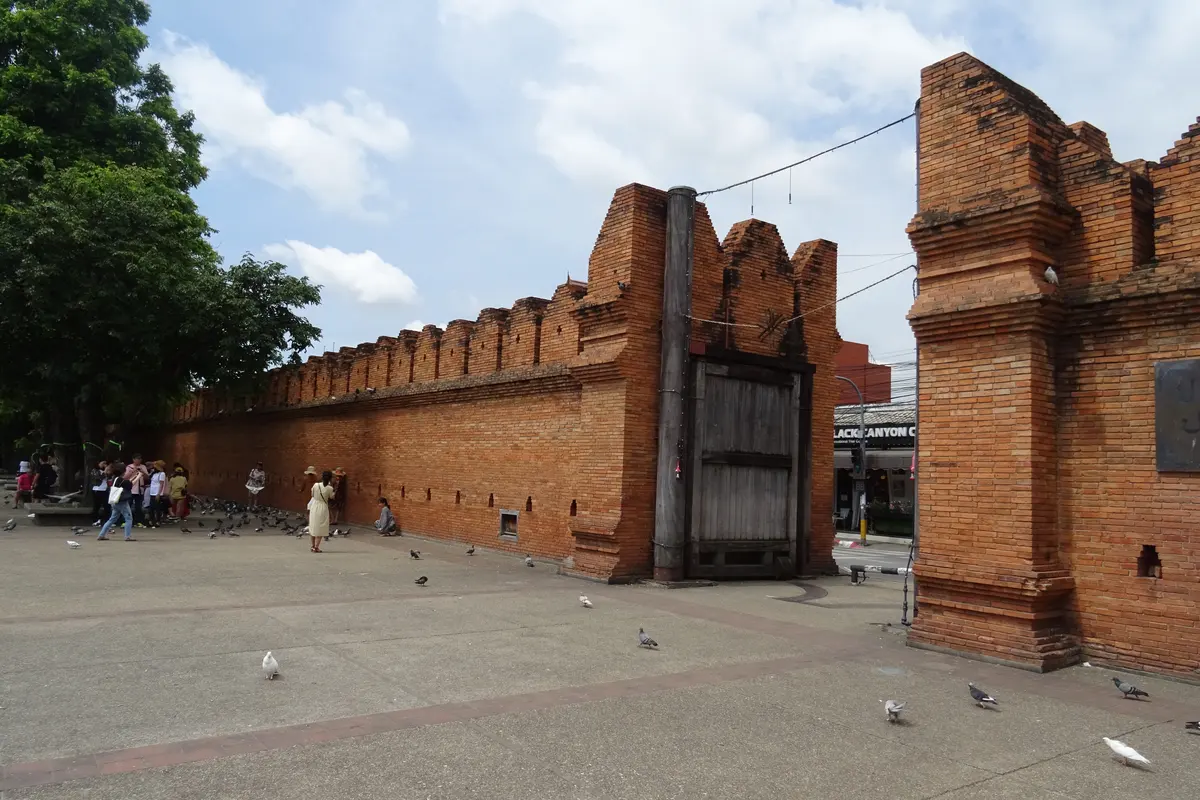
Chiang Mai, whose name means new city, was founded in 1296 as the new capital of Lan Na, succeeding Chiang Rai. Its founder was Mangrai, the first king of Lan Na, who had earlier conquered the Mon kingdom of Haripunchai. The Lan Na kingdom, centred on what is now northern Thailand, lasted between the 13th and 18th centuries; the Chiang Mai Chronicle calls it Mueang Lanna, the country of a million rice fields. Tha Phae Gate, the eastern gate of the old city, was first built in Mangrai's reign, though the gate you see today is a reconstruction from the 1980s.
Muay in the Mangrai law
The oldest known written use of the word muay is found in palm-leaf manuscripts in the Northern Thai language: the customary law enacted under King Mangrai in 1296. In its section 7, under an article on eighteen types of quarrel, it mentions the Tai martial art of muay, the first such mention in the Lan Na kingdom. Thai historical accounts also name Mangrai among the notable students of the Samo Khon school, said to have been founded in the 7th century by a hermit who taught martial arts, archery and the handling of elephants and horses.
A king who died in the market
Mangrai's link with Chiang Mai's commercial life has a curious ending. According to tradition, he died in the city during a thunderstorm, struck by lightning while he was in the market, in 1311 or 1317. It is a story told rather than proven, but it is a reminder that markets have been part of Chiang Mai since its first years. Today's Night Bazaar has a different history: it began as a market owned by Chinese merchants, and grew as more commercial buildings went up, until it had many owners, most of them Thai.
From the north to Siam
Lan Na's independence did not last. It became a vassal state of the Toungoo dynasty in 1558, left Burmese allegiance for Siam in 1775, and was taken by Siam under Taksin in 1776. Through the later 1800s the Siamese state absorbed the kingdom, reorganising it as Monthon Phayap from 1874; by 1909 Lan Na had ceased to exist as a separate polity. The northern muay of the old kingdom therefore flowed into a national story, and the modern sport you watch at the bazaar took its rules from developments in Bangkok rather than in Chiang Mai.
Royal interest and the first rings
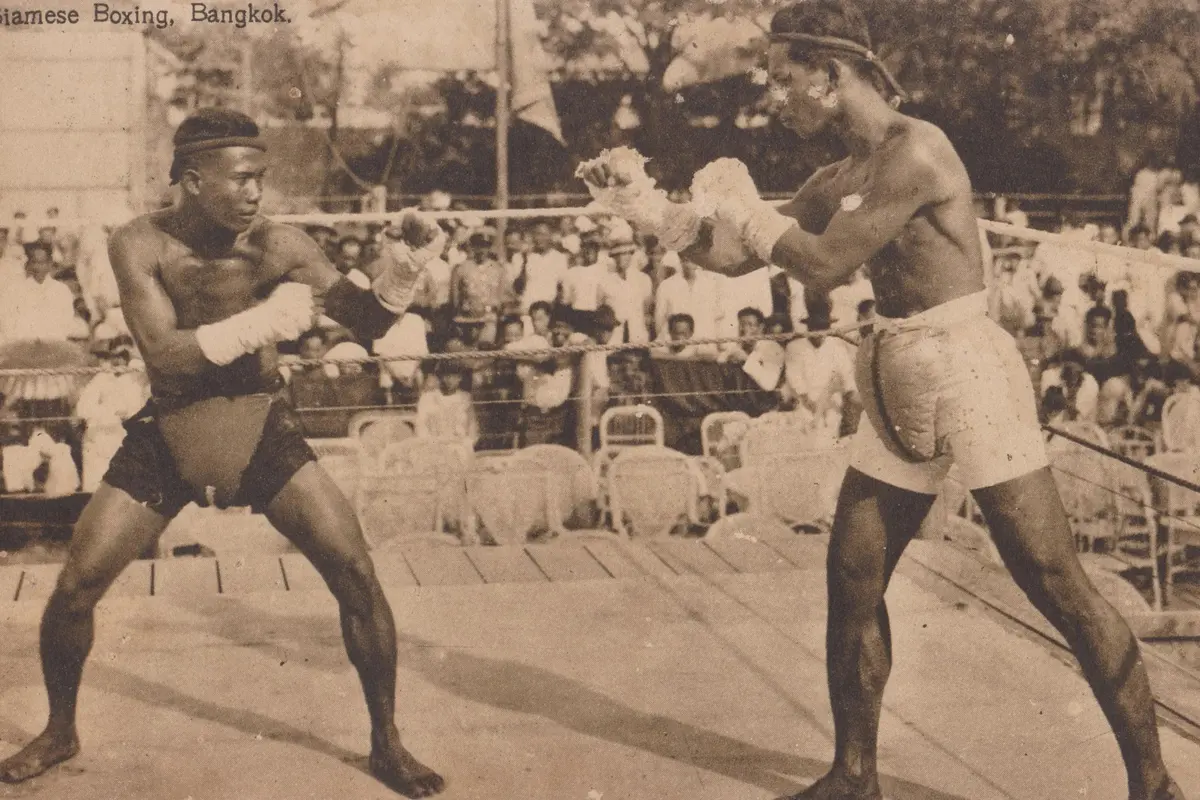
King Chulalongkorn, Rama V, who came to the throne in 1868, took a personal interest in muay, set up nationwide tournaments and gave a noble title to winners. In 1910 he invited fighters from the provinces to fight at a royal funeral, and the three strongest, who came from Lopburi, Khorat and Chaiya, later gave their names to regional styles. Thailand's first permanent ring was built in 1921 at Suan Kulap College. Under King Rama VII, competitions gained referees, boxing gloves, rounds and Western boxing rings, and the older rope-bound style declined.
Naming the sport
The name itself is relatively recent. Fighters had long simply called their art muay; the term Muay Thai came into use in the early 20th century, in physical-education documents, to tell it apart from international boxing, called muay sakon. The term Muay Boran was coined later to describe pre-modern fighting, and it is now performed mainly as an exhibition art. Much of the history now told as standard was codified in the late 20th century, as Muay Thai was being recognised as a national sport and part of the country's heritage.
Reading the old stories with care
Some of the most repeated tales about Muay Thai are treated cautiously by historians. Wikipedia's article notes that nationalist supporters of the sport, wanting to establish its history, produced an account that is sometimes unfounded and extrapolated from brief mentions in written records. The best-known example is the folk hero Nai Khanom Tom, said to have defeated a line of Burmese fighters after the fall of Ayutthaya; scholars have argued that the legend probably took shape in the 20th century. Muay Thai Day is still marked in his honour on 17 March.
Read next: What happens before the bell
Sources